

The Collector's Guide
How to Store Football Cards and Stickers (So They Actually Last)
Published Date: 04th August 2026
Published Date: 04th August 2026
In this guide we’ll teach you how to store football cards and stickers. Anyone who has opened an old shoebox and found a Panini album with curled pages, or a stack of cards stuck together by damp, knows how quickly a collection can go wrong. The good news is that storing football cards and stickers properly isn’t complicated or expensive. It mostly comes down to a few cheap habits and picking the right spot in your house.
Here’s how to do it, whether you’ve got a few swaps in a tin or a few thousand cards.
Every card worth keeping should go into a soft sleeve (often sold as a “penny sleeve”) as soon as it comes out of the pack. They cost next to nothing and stop the surface scratches and edge wear that happen when cards rub against each other.
Check that the sleeves are PVC-free and acid-free. Cheap, soft PVC plastic can break down over the years and leave a sticky residue or cloudy film on the card.
Anything you’d be upset to see damaged, such as rookies, autographs, numbered parallels and 1/1s, should go in a rigid top loader or a semi-rigid holder after sleeving. Slide the card into a soft sleeve first, then into the top loader. Putting a card straight into a top loader means it can slide around and chip its corners.
If you enjoy looking at your collection, a binder is the way to go. A few things matter more than the brand:
For anything you won’t be looking at often, a sturdy cardboard storage box is better than a binder. Look for acid-free boxes and keep cards upright and snug, not crammed in and not left loose enough to slump over. Never use rubber bands. They leave dents and can fuse to the card over time.
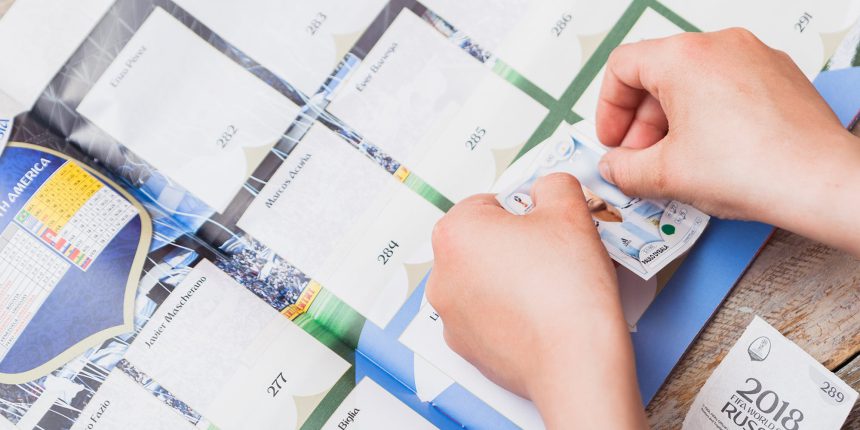
Stickers are a different job from cards. They’re thinner, and the adhesive can cause trouble if you store them badly.
If your stickers are in an album, the album is what needs protecting. Keep it away from damp and direct sunlight, and store it upright or flat with nothing heavy on top. Don’t squeeze extra inserts or loose cards between the pages, because that stresses the spine and can lift stickers from the page. A clear plastic cover or archival sleeve will help it survive years of being moved around.
If you’re keeping stickers unstuck, either as swaps or because you want to preserve them, keep the backing paper on and put each one in a sleeve. Never let the adhesive side touch another sticker, a plastic page or the inside of a binder. Once a sticker has bonded to something, it almost never comes off cleanly.
For swaps, sort them by album number and keep them in a small box or in sleeves in a binder, so you can find the one you need in seconds at a swap session or school gate.
If you’re holding on to sealed packs or boxes, store them flat and away from heat. Warmth is the enemy of the adhesive inside, and a hot loft is the worst place for them. We have a full guide on protecting football cards and stickers from the sun here.
You can have the best sleeves in the world and still ruin a collection by putting it in the wrong room.
Clean, dry hands are all you need. Wash them before you go through your cards, and don’t handle them straight after eating or applying hand cream. Hold cards by the edges, and don’t flex or bend them to “check” for a crease. Most collectors avoid cotton gloves, as they can snag corners and make it harder to grip a card.
Once your collection is stored properly, the next problem is remembering what’s in it. It’s easy to end up buying a card you already have, or missing a trade because you can’t remember whether you need a number.
A simple record of your cards and stickers (player, set, card number, and which ones are spares) saves a lot of this. It also helps if you ever need to prove what you own for insurance. You can keep it in a notebook or spreadsheet, but a proper collection tracker makes it far easier to update as you go. With Cardzillo you can log your cards, flag your needs and duplicates, and export the lists before your next card show or swap.
Ready to make the most of your hobby? Sign up today to unlock full access to all our tools and join a growing community of collectors.
Sign Up for Free