

The Collector's Guide
Box Breaks 101: A Beginner’s Guide to Collecting Without Buying Whole Boxes
Published Date: 05th May 2026
Published Date: 05th May 2026
If you’ve spent any time in the sports card hobby, you’ve probably seen the term “box break” thrown around everywhere, from livestreams to social media feeds with new breakers popping up all the time. It’s going through a massive growth period right now. For the new collectors in the hobby, it can look fast-paced, chaotic and sometimes even a little confusing. But once you watch a couple of streams and understand how it works you will understand how box breaks have become one of the most accessible ways to enjoy the Sports Card and Pokémon TCG hobby without committing to the mammoth cost of sealed products.
In this guide, we will break down everything there is to know about box breaks, how they work, our experience and whether they’re really worth it for collectors.
So a box break is when a sealed box of sports cards is opened live by a host, and then the contents of that are distributed to participants who have bought into the “break”. The idea is that instead of buying the whole hobby box yourself, which can be a huge cost to you as a collector and then could leave you with a bunch of cards that you don’t want. You buy a “slot” in the break, this slot will then determine the cards you receive from the box.
Think of it as splitting the cost of a box with a group of collectors, while still having a chance to hit something big. So if you’re an Arsenal fan, you can pay to just receive the Arsenal cards from the box or case, and then you can let the Chelsea fan who bought the “Chelsea” space receive the Chelsea cards you don’t want.
The exact format can vary, but most breaks follow a similar structure.
A breaker (the person or company running the break) like CardsMaate or TFF Breaks will list available spots for a specific product, this could be a hobby box, multiple boxes, or even a full case. Each spot is assigned in a specific way, depending on the break type. This can be by team, player, insert, case hit etc.
Once all spots are sold, the break is carried out, usually live, so participants can watch the cards being opened in real time. Any cards pulled are then sorted and shipped to the relevant participants. This also protects you with the authenticity of everyone sees when you win or lose.
It’s part collecting, part entertainment, and also… part gamble.
Understanding the different formats is key, because not all breaks carry the same level of risk or value.
Random Team Breaks are one of the most popular options. You buy a spot, and teams are randomly assigned before the break begins. If your team hits a big card, it’s yours, but there’s also a chance your team gets nothing.
Pick Your Team (PYT) breaks let you choose your team upfront. Strong teams or those with top rookies usually cost more, while less desirable teams are cheaper. This format gives you more control but removes some of the randomness. Especially for the bigger chases in the hobby.
Random Division or Random Player breaks group spots differently, either by divisions or specific players. These are less common but can offer interesting value depending on the product.
Each format comes down to how much control you want versus how much risk you’re willing to take.
The biggest reason is simple: cost efficiency.
Sealed boxes, especially premium releases like Topps Chrome and Panini Prizm are expensive. Box breaks let you get involved at a fraction of the price while still having access to high-end cards that might otherwise be out of reach.
They also add a layer of excitement. Watching a live break, knowing you’ve got a stake in what’s being opened, creates a completely different experience compared to buying singles. For many collectors, it’s also a social activity. Break communities often build strong followings, with regular participants, chat interaction, and shared hype moments. Bringing that real sense of community to the hobby and the breaker’s audience.
Box breaks aren’t a guaranteed win, far from it and it’s vital to be clear about that.
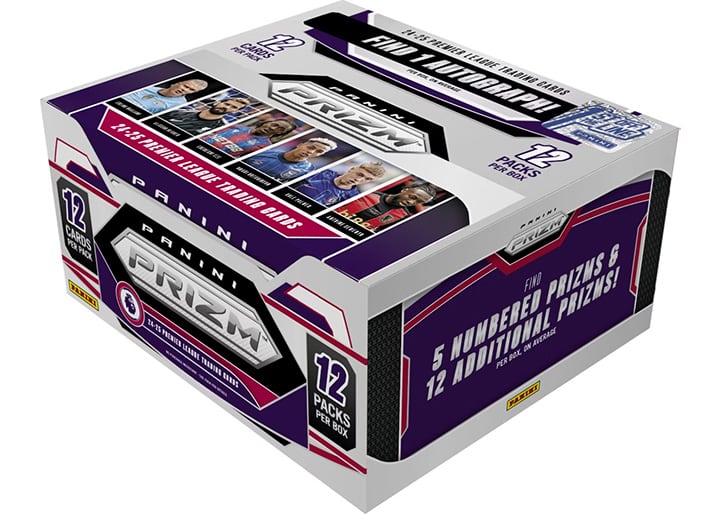
The biggest downside is that you can pay for a spot and end up with little or nothing in return. This is especially common in random team formats where some teams simply don’t hit in a given box. This is from our own experiences when I went in for a Cole Palmer spot in a Panini Prizm Premier League after his breakout season with Chelsea. I didn’t hit sadly and therefore the £10 I spent on the player spot was gone and I was left with a consolation prize of a Topps Living Mason Mount, nice enough card but not what you go in the break hoping for. And that is the point.
There’s also the issue of value. Over time, the total cost of buying into multiple breaks can exceed the cost of just buying the cards you actually want. In other words, breaks are fun, but they’re not always the most efficient way to build a collection. Sometimes you really are just better off buying singles you like.
If you’re just getting started, the key is to treat box breaks as part of your collecting strategy, not the whole thing.
Start small. Test different break formats and see what suits your style. Some collectors prefer the control of picking teams, while others enjoy the randomness and lower entry cost of random breaks.
Do a bit of research before joining a break. Understand the product being opened, the checklist, and which teams or players carry the most value. This helps you avoid going in blind.
Most importantly, set a budget. It’s easy to get caught up in the excitement of live breaks, especially when big cards start getting pulled.
The honest answer is: it depends on what you’re looking for and of course, your budget.
If your goal is pure value and efficiency, buying singles will almost always come out on top. But if you’re looking for excitement, community, and a chance at high-end cards without paying full box prices, breaks can absolutely be worth it.
They sit somewhere between collecting and entertainment, and understanding that balance is what separates smart collectors from frustrated ones.
Box breaks have become a huge part of the modern sports card hobby, lowering the barrier to entry for high end products while adding a new layer of excitement to collecting. For beginners, they offer a way to get involved without spending big on sealed boxes, but they also come with risks that shouldn’t be ignored.
Approach them with the right mindset, keep your expectations realistic, and they can become a fun and valuable part of your collecting journey. For more information on how you can start your own football/soccer card collection, we have a wide range of guides, tips and tricks to help you get started.
Ready to make the most of your hobby? Sign up today to unlock full access to all our tools and join a growing community of collectors.
Sign Up for Free